The afternoon of November 14, 2024, started like any other for David Miller, a Marietta resident commuting home from his construction job. He was heading south on I-75 near the Delk Road exit, a stretch of highway notorious for its congestion and sudden stops. What happened next, however, was anything but ordinary: a devastating Marietta truck accident involving a commercial semi-truck, leaving David with a severe paralysis injury and facing a future irrevocably altered. This catastrophic event immediately triggered a complex legal battle, underscoring the deep challenges in pursuing a catastrophic claim.
Key Takeaways
- A paralysis injury from a truck accident can incur lifetime medical costs exceeding $5 million, requiring extensive financial recovery strategies.
- Georgia law, specifically O.C.G.A. Section 51-12-5.1, allows for punitive damages in cases of egregious negligence, significantly increasing potential compensation.
- Timely investigation, including securing black box data and witness statements, is important within the first 72 hours following a severe truck accident.
- Victims of catastrophic injuries in Georgia have a two-year statute of limitations (O.C.G.A. Section 9-3-33) to file a personal injury lawsuit.
- Securing expert testimony from life care planners and vocational rehabilitation specialists is indispensable for accurately projecting future needs and damages in paralysis cases.
| Feature | Immediate Legal Action | Proving Negligence | Quantifying Future Damages |
|---|---|---|---|
| Timeline Criticality | ✓ Within 72 hours | ✓ Post-accident investigation | ✓ Long-term projections |
| Key Evidence Collection | ✓ Black box data & witness statements | ✓ Driver logbooks & maintenance records | ✓ Expert testimony |
| Legal Basis/Statute | ✓ O.C.G.A. Section 9-3-33 (2-year limit) | ✓ O.C.G.A. Section 51-12-5.1 (Punitive) | ✓ O.C.G.A. Section 51-12-4 (Damages) |
| Involves Expert Teams | ✓ Accident reconstruction | ✗ Not explicitly stated | ✓ Life care planners, vocational specialists, economists |
| Focus on Driver Actions | ✓ Speeding (68 mph in 55 mph) | ✓ Fell asleep at wheel, HOS violations | ✗ Focus on victim’s needs |
| Focus on Company Actions | ✗ Not primary focus | ✓ Maintenance issues (brakes), HOS compliance failure | ✗ Not primary focus |
| Financial Implications | ✗ Prevents evidence loss | ✓ Allows for punitive damages | ✓ Lifetime costs exceeding $5M |
The Immediate Aftermath: A Scene of Chaos and Critical Decisions
David’s pickup truck was crushed, a mangled heap of steel against the concrete barrier. The semi-truck, owned by a regional logistics company, had jackknifed across three lanes after its driver, later identified as Robert Jenkins, allegedly fell asleep at the wheel. First responders from the Cobb County Fire Department arrived quickly, extracting David from the wreckage. He was rushed to Wellstar Kennestone Hospital, a Level II trauma center in Marietta, where doctors confirmed the worst: a T6 spinal cord injury, resulting in paraplegia. His life, and that of his family, had just been redefined.
The initial hours post-accident are critical, not just for medical intervention but for legal strategy. Evidence dissipates rapidly. Skid marks fade, witness memories blur, and important data from the truck’s electronic control module (ECM), or “black box,” can be overwritten. We immediately dispatched an accident reconstruction team to the scene. Their findings were key, confirming that Jenkins had failed to brake in time, traveling at 68 mph in a 55 mph zone, and showing no signs of evasive action. This early, proactive investigation is a non-negotiable step in any serious truck accident case.
Suffered a serious injury?
Know what your case is worth with AI Catastrophic Payout Calculator for FREE!
Start my free evaluationUnderstanding the Nature of Paralysis Claims in Georgia
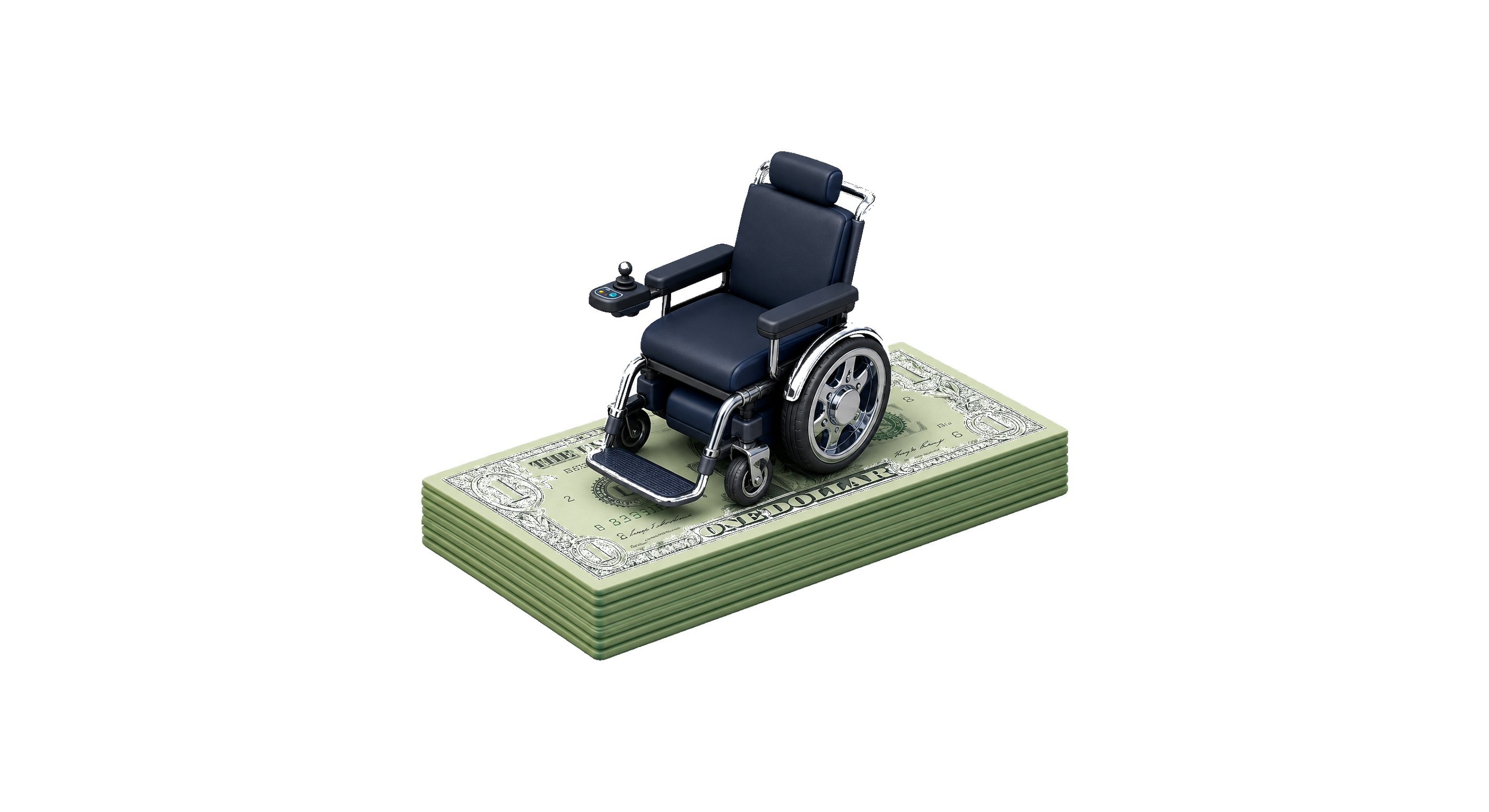
A paralysis injury is not merely a physical impairment. It is a life-altering event with deep financial, emotional, and social consequences. For David, this meant a future involving wheelchairs, extensive physical therapy, modifications to his home, and potentially round-the-clock care. The costs associated with such an injury are staggering. According to a 2025 report by the National Spinal Cord Injury Statistical Center (NSCISC) at the University of Alabama at Birmingham, the average lifetime cost for a high paraplegia injury sustained at age 25 can exceed $3.5 million, often reaching upwards of $5 million when factoring in lost wages and non-medical expenses. These figures are not static. They increase with inflation and medical advancements. Any legal strategy must account for these astronomical, lifelong expenditures.
Georgia law provides avenues for victims like David to seek complete compensation. Under O.C.G.A. Section 51-12-4, damages can include medical expenses (past and future), lost income (past and future), pain and suffering, and loss of consortium for spouses. The complexity truly begins when quantifying “future” damages. This requires a team of experts: life care planners, vocational rehabilitation specialists, and economists. A life care planner, for example, will carefully detail every future medical need, from medications and surgeries to adaptive equipment and personal care attendants, projecting these costs over David’s expected lifespan. This isn’t guesswork. It’s a scientific projection based on established medical protocols and actuarial data.
The Role of Negligence: Holding Trucking Companies Accountable
The core of David’s catastrophic claim rested on proving the trucking company’s negligence. While the driver, Robert Jenkins, was clearly at fault for falling asleep, the legal inquiry extends beyond the individual. Trucking companies operate under stringent federal regulations enforced by the Federal Motor Carrier Safety Administration (FMCSA). These regulations cover everything from driver hours of service (HOS) to vehicle maintenance and driver qualification. Our investigation revealed several potential points of corporate negligence.
First, Jenkins’ logbooks showed discrepancies, suggesting he might have violated HOS rules, which limit the number of hours a driver can operate a commercial vehicle. Exhaustion is a known factor in many truck accidents, and FMCSA regulations are designed specifically to prevent fatigued driving. Second, the truck itself had a history of maintenance issues, specifically with its braking system, which had been noted in pre-trip inspection reports but not adequately addressed. A trucking company has a duty to ensure its fleet is safe and its drivers are compliant. When they fail in this duty, they are liable.
In Georgia, if a defendant’s conduct shows “willful misconduct, malice, fraud, wantonness, oppression, or that entire want of care which would raise the presumption of conscious indifference to consequences,” punitive damages may be awarded. O.C.G.A. Section 51-12-5.1 caps punitive damages in most cases at $250,000, but there’s a critical exception: if the defendant acted with specific intent to cause harm, or if they were under the influence of alcohol or drugs, the cap does not apply. While Jenkins was not intoxicated, the company’s alleged systemic failures in ensuring driver compliance and vehicle maintenance could potentially open the door to uncapped punitive damages, arguing “conscious indifference to consequences.” This is an aggressive but often necessary approach to truly hold negligent corporations accountable.
Working through the Legal Labyrinth: Pre-Trial and Discovery
The initial phase of any catastrophic injury lawsuit involves extensive discovery. This is where both sides gather information, exchanging documents, conducting depositions, and interviewing witnesses. For David’s case, this meant scrutinizing thousands of pages of documents: Jenkins’ employment file, his driving records, the truck’s maintenance logs, company safety policies, and even internal communications. We deposed Jenkins, his supervisors, and the company’s safety director. These depositions are high-stakes affairs, where every word can either strengthen or weaken a claim. Jenkins’ testimony, for instance, revealed that he had complained about fatigue to his dispatcher in the days leading up to the accident, but no action was taken. This detail significantly bolstered the argument for corporate negligence.
We also engaged medical experts to provide detailed prognoses and explain the full extent of David’s injuries to a potential jury. Neurologists, rehabilitation specialists, and occupational therapists all contributed to a complete picture of David’s current state and future needs. The defense, predictably, brought their own experts, often attempting to minimize the long-term impact of the injury or argue that David’s pre-existing conditions (he had a minor back issue years prior) contributed to the severity of his current paralysis. This is standard procedure, and countering these arguments requires careful preparation and a deep understanding of medical science.
Mediation, a form of alternative dispute resolution, typically occurs before a trial. It’s an opportunity for both sides to meet with a neutral third party (the mediator) to try and negotiate a settlement. While not always successful, mediation can often resolve cases without the need for a lengthy and expensive trial. In David’s case, the trucking company initially offered a settlement that was woefully inadequate, barely covering a fraction of his projected lifetime costs. This is not uncommon. Insurance companies are in the business of minimizing payouts, and it often takes significant legal pressure to make them recognize the true value of a catastrophic claim.
The Human Element: David’s Journey and the Role of Advocacy
Beyond the legal complexities, there is the human story. David, a man who once built homes with his own hands, now faced a daily struggle for independence. His wife, Maria, became his primary caregiver, her own life irrevocably changed. Their two children, still young, grappled with seeing their father in a wheelchair. A catastrophic injury impacts an entire family, not just the individual. Our role extended beyond legal representation. It involved connecting David and Maria with support groups, rehabilitation resources, and financial planners who understood the unique challenges of spinal cord injuries.
For example, we helped them navigate the complexities of Medicaid and Medicare eligibility, and apply for assistance through organizations like the Shepherd Center in Atlanta, a nationally recognized hospital specializing in spinal cord injury rehabilitation. These support systems are vital for quality of life and long-term adjustment. It’s easy for lawyers to focus solely on the legal fight, but true advocacy means addressing the well-rounded needs of the client. This perspective, I believe, is what truly differentiates competent legal counsel from exceptional legal counsel.
Resolution and Lessons Learned
After nearly two years of intense litigation, including several rounds of mediation and extensive pre-trial motions, the trucking company and their insurer finally agreed to a substantial settlement. While confidentiality agreements prevent me from disclosing the exact figure, it was sufficient to cover David’s projected lifetime medical care, lost wages, home modifications, and provide for his family’s future security. The settlement was reached just weeks before the scheduled trial in the Cobb County Superior Court, avoiding the inherent risks and uncertainties of a jury verdict. The trucking company also agreed to implement new safety protocols, including mandatory fatigue detection software in their fleet and more rigorous driver training, a small but significant victory that could prevent future tragedies.
David’s case offers several critical lessons for anyone facing a catastrophic injury from a truck accident in Georgia. First, immediate action is paramount. Do not delay in seeking legal counsel. The window for preserving important evidence is narrow. Second, understand the full scope of damages. A paralysis injury is not a short-term problem. It requires lifelong financial planning. Third, be prepared for a protracted legal battle. Trucking companies and their insurers rarely settle quickly or for fair value without significant pressure. Finally, choose legal representation that not only understands the law but also empathizes with the deep human impact of such an injury. This combination is essential for achieving justice and securing a stable future.
The road to recovery for David is long and challenging, but with the legal battle behind him, he and Maria can now focus entirely on his rehabilitation and rebuilding their lives. This outcome is proof of persistent advocacy and the unwavering pursuit of justice for victims of severe negligence.
Working through the aftermath of a catastrophic truck accident requires immediate, expert legal intervention to protect your rights and secure the complete compensation needed for a lifetime of care and recovery.
What is a catastrophic injury in the context of a truck accident?
A catastrophic injury refers to a severe injury that results in long-term or permanent disability, significantly impacting an individual’s ability to work or perform daily activities. Examples include spinal cord injuries leading to paralysis, traumatic brain injuries, severe burns, or loss of limbs. These injuries often require extensive, lifelong medical care and rehabilitation.
How long do I have to file a lawsuit after a truck accident in Georgia?
In Georgia, the statute of limitations for most personal injury claims, including those arising from truck accidents, is generally two years from the date of the accident. This is codified under O.C.G.A. Section 9-3-33. Failing to file a lawsuit within this timeframe typically results in the forfeiture of your right to pursue compensation.
What types of damages can be recovered in a paralysis injury claim?
Victims of paralysis injuries can seek various types of damages, including economic and non-economic losses. Economic damages cover calculable costs such as past and future medical expenses (hospital stays, surgeries, therapy, medications, adaptive equipment), lost wages, and loss of earning capacity. Non-economic damages compensate for intangible losses like pain and suffering, emotional distress, loss of enjoyment of life, and loss of consortium for spouses.
Can a trucking company be held responsible for a driver’s negligence?
Yes, trucking companies can often be held liable for their drivers’ negligence under various legal theories, including vicarious liability (respondeat superior), negligent hiring, negligent training, negligent supervision, or negligent maintenance of their fleet. Federal regulations, like those from the FMCSA, impose strict duties on trucking companies, and violations can strengthen a claim of corporate negligence.
What is the significance of a truck’s “black box” data in an accident investigation?
The “black box,” or Electronic Control Module (ECM), in a commercial truck records critical data points leading up to an accident. This data can include vehicle speed, braking activity, engine RPM, steering input, and even seatbelt usage. This information is invaluable for accident reconstruction, providing objective evidence of how the truck was being operated at the moment of impact and helping to establish fault.