
Getting hit by a Lyft driver in Los Angeles as a pedestrian throws you into a complex legal mess. The aftermath is disorienting, and the road to recovery is full of obstacles. Securing the compensation you actually deserve means understanding how to navigate a system that is stacked against you from the start.
Key Takeaways
- Under California Vehicle Code Section 21950, drivers must yield to pedestrians. This puts the responsibility squarely on the driver in crosswalks and other walking areas.
- Lyft’s insurance, with its $1 million liability policy during active rides, is a separate beast from personal auto insurance and requires a specific strategy to access.
- You have to document everything at the scene, photos, witness contacts, and the police report, to build a claim that can’t be easily dismissed.
- Go to a hospital like Cedars-Sinai Medical Center or LAC+USC Medical Center right away. This is non-negotiable for your health and for creating a medical record that proves your injuries are from the accident.
- A personal injury lawyer who specializes in rideshare cases can explain your rights and has the experience to pursue real compensation for your medical bills, lost income, and pain.
Here’s the problem: you get hit by a distracted driver, and suddenly you’re facing serious injuries, huge medical bills, and no paycheck, with no idea how to make the person responsible pay up, especially when a company like Lyft is involved. The first mistake so many victims make is right at the beginning. Overwhelmed by pain and shock, they don’t get immediate medical care, they forget to gather evidence at the scene, or they try to handle the insurance company on their own. If you don’t get medical treatment right away, the insurance company will argue you weren’t really hurt by the crash. If you don’t get witness info, it becomes a he-said-she-said battle you’re likely to lose.
Imagine getting hit near the busy intersection of Hollywood Boulevard and Highland Avenue. You might just swap info with the Lyft driver and think it’s like any other car accident claim. It’s not. Rideshare insurance is a trap for the unwary. A Lyft driver has different insurance coverage depending on whether they’re actively on a trip or just have the app on, a distinction that is completely lost on most victims and even on lawyers who don’t handle these specific types of cases every day.
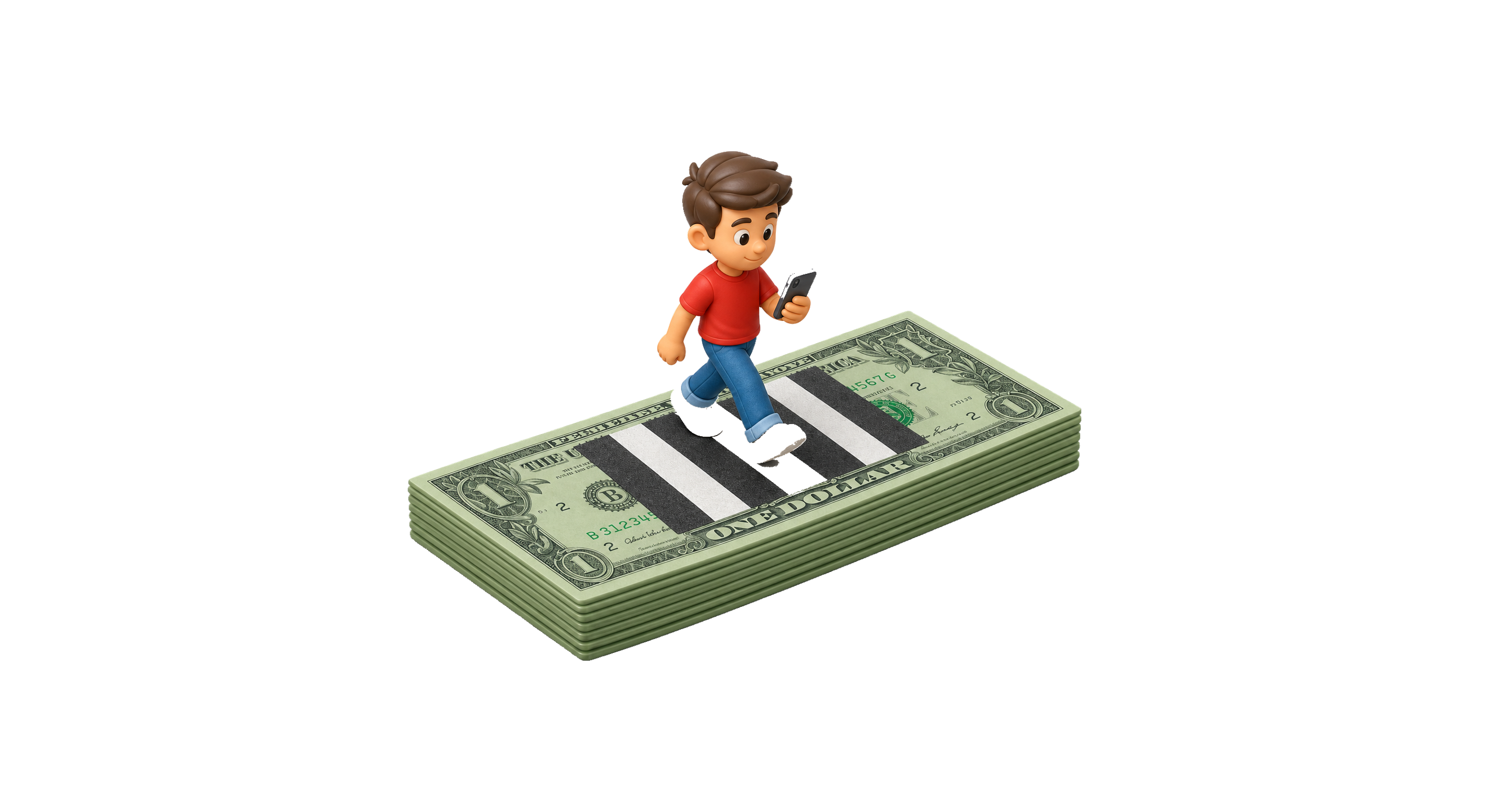
Injured as a pedestrian?
Know what your case is worth with AI Pedestrian Payout Calculator for FREE!
Start my free evaluationUnderstanding Driver Distraction and Liability in Los Angeles
The National Highway Traffic Safety Administration (NHTSA) has been warning about distracted driving for years, and in a city with traffic as dense as Los Angeles, the risk for pedestrians is off the charts. A rideshare driver checking their app, answering a passenger’s text, or working through an unfamiliar street is a time bomb. Their attention isn’t on the road, it’s on their phone.
The law in California is incredibly clear on this. California Vehicle Code Section 21950 puts the burden on drivers to yield to pedestrians in both marked and unmarked crosswalks. Even if a pedestrian is crossing somewhere else, a driver who has time to stop and doesn’t is still at fault. When a Lyft driver is distracted, they are violating this duty of care, which makes them liable for the injuries they cause.
Proving driver distraction in court is hard. You can’t just assume a judge will take your word for it. You need evidence. Getting cell phone records often requires a court-ordered subpoena. Dashcam footage is great if it exists. This is why witness testimony is absolute gold. For example, if a bystander saw the Lyft driver looking down at their phone just before hitting a pedestrian near the Bradbury Building, their statement becomes the backbone of the case. A good lawyer knows exactly how to hunt down that witness, get that footage, and file the motions to get those phone records.
And then there’s Lyft itself. Like its competitors, Lyft has spent a fortune on legal and political battles to classify its drivers as independent contractors, a move designed to shield the company from direct liability when one of its drivers hurts someone. While California laws like AB5 have pushed back, the fight is ongoing. The good news for victims is that regardless of this classification, these rideshare companies are required to carry huge insurance policies, policies designed to cover exactly these kinds of accidents.
Working through Lyft’s Insurance Policies
To get paid what you’re owed after a pedestrian is hit in a Lyft accident in Los Angeles, you have to understand and beat them at their own insurance game. It’s a complex process where unrepresented people get crushed.
Step 1: Document the Scene and Seek Immediate Medical Attention
Your first move is always about safety and getting medical care. Go to the hospital immediately, even if you think you’re just a little sore. A top-tier trauma center like Cedars-Sinai Medical Center (8700 Beverly Blvd, Los Angeles, CA 90048) or LAC+USC Medical Center (2051 Marengo St, Los Angeles, CA 90033) will not only treat you but will also create the medical documentation that links your injuries directly to the crash. If you wait a week to see a doctor, the insurance company will claim you got hurt doing something else.
If you’re physically able to at the scene, use your phone. Take pictures of everything, the car, your injuries, the intersection, traffic lights. Get the names and numbers of anyone who saw what happened. Get the Lyft driver’s name, their personal and rideshare insurance info, and their license plate. And always get the police report number from the LAPD officers who respond. That report is an official, third-party account of what happened.
Step 2: Understand Lyft’s Phased Insurance Coverage
Lyft’s insurance is broken into different phases, and the amount of money available to a victim depends entirely on which phase the driver was in. This is where it gets complicated. According to Lyft’s own policies, there are three main scenarios:
- Driver is offline or the app is off: Lyft provides zero coverage. You’re stuck dealing with the driver’s personal (and probably insufficient) car insurance.
- Driver is online, waiting for a ride request: In this “period 1,” Lyft offers some contingent liability coverage, but it’s limited: typically $50,000 per person/$100,000 per accident for bodily injury. It’s usually secondary to the driver’s own insurance.
- Driver is en route to pick up a passenger or actively transporting a passenger: This is the key phase. When the driver is actively working, Lyft’s primary liability policy kicks in, providing up to $1 million to cover injuries and damages. This is the policy you need to access.
Pinpointing the driver’s exact phase at the moment of impact is the first and most important battle. It’s the difference between a $50,000 policy and a $1 million one. An experienced attorney’s first move is to send a preservation letter and subpoena to Lyft to get the electronic data that proves what the driver was doing.
Step 3: Engage an Experienced Personal Injury Attorney
If you have a serious injury, getting a lawyer isn’t a suggestion. It’s a requirement. Trying to negotiate with Lyft’s insurance adjusters yourself is a disaster waiting to happen. These adjusters are professional negotiators whose only job is to protect their company’s bottom line by paying you as little as possible. They might offer to pay your ER bill ($5,000) and get you to sign a release, when in reality you’re facing future surgeries and lost wages that could total hundreds of thousands of dollars.
A lawyer who specializes in these cases will:
- Immediately investigate everything: They’ll pull the police report, track down witnesses, get all your medical records, and subpoena Lyft for app data and driver history. Their team knows how to confirm the driver’s insurance phase at the time of the collision.
- Calculate your *full* damages: This isn’t just adding up the bills you have today. A real calculation projects the costs of future physical therapy, surgeries, and medications. It accounts for your lost earning capacity if you can’t do your old job. And it puts a number on your pain, suffering, and emotional trauma. A spinal injury from being hit on Wilshire Boulevard could mean a lifetime of medical needs and lost income.
- Negotiate from a position of strength: Armed with a mountain of evidence and a detailed breakdown of your damages, your attorney can negotiate effectively. They know the adjusters’ tricks, they know what your claim is really worth, and they won’t be bullied into an unfair settlement.
- File a lawsuit when necessary: If the insurance company refuses to make a fair offer, your attorney will be ready to sue them in a venue like the Stanley Mosk Courthouse. Filing a lawsuit is a powerful tool. It shows the insurer you’re not going away and forces them to start spending money on defense, which often brings them back to the table with a better offer.
These cases can take months or even years to resolve, especially when injuries are severe and future costs are high. During that entire time, your attorney deals with all the phone calls, paperwork, and legal deadlines, which lets you focus on what actually matters: your physical and mental recovery.
Securing Compensation for Pedestrian Victims
The goal is to get you the money to cover all of your losses. Fair and complete compensation means recovering damages for everything the accident cost you, from the tangible bills to the intangible human suffering.
Economic Damages
- Medical Expenses: This is every penny related to your care: the ambulance, ER, hospital stay, surgeries, doctor visits, prescriptions, physical therapy, and any future care you’ll need. A traumatic brain injury after getting hit on Figueroa Street can mean a lifetime of costs that easily run into the hundreds of thousands or even millions.
- Lost Wages: You get compensated for the paychecks you missed while recovering. If your injuries mean you can’t return to your old job or have a permanent disability, you can also claim damages for that future lost earning capacity.
- Property Damage: This covers personal items that were destroyed, like your phone, laptop, or glasses.
Non-Economic Damages
- Pain and Suffering: This compensates you for the physical pain and emotional trauma of the accident and your recovery. In many serious injury cases, this is the largest single component of the settlement because it reflects the immense human cost.
- Loss of Enjoyment of Life: If the injury stops you from doing things you used to love, like a runner who can no longer compete in marathons after a distracted Lyft driver shattered their leg, you can be compensated for that loss.
- Emotional Distress: This covers the psychological fallout from the accident, including anxiety, depression, and PTSD.
The results of a well-prosecuted case can be substantial because the available insurance is high and the potential damages are enormous. For a pedestrian who suffers multiple fractures after being hit by a rideshare driver near Pershing Square, a lawyer might secure a settlement covering their $150,000 in medical bills, $50,000 in lost wages, and another $300,000 for pain and suffering. These are realistic figures for severe injury cases in Los Angeles. The final outcome always depends on the specific facts, the severity of the injuries, the available insurance, and the skill of the legal team.
These accidents are devastating, and it’s critical for victims to have an advocate fighting for them. Without proper legal representation, victims are at the mercy of the insurance companies, who know an unrepresented person is an easy mark. They will take the first lowball offer, maybe $20,000 on a case worth $250,000, because they don’t know any better and they’re desperate. The insurer’s business model counts on this happening.
The legal field for rideshare accidents is also constantly changing, with ongoing court battles over gig worker classification in California. These changes can create new pathways for holding companies liable. A good attorney is always watching these developments and adapting their strategy to get the best result for their client.
In the end, this is about more than just money. It’s about justice. It’s about getting the resources you need to pay for your medical care and rebuild your life without being crushed by debt. It’s about holding a distracted driver, and the multi-billion dollar company behind them, accountable for the damage they caused on the streets of Los Angeles.
What should I do immediately after being hit by a Lyft driver as a pedestrian in Los Angeles?
First, get to safety if you can. Then call 911 to get police and an ambulance on the way. Let the paramedics check you out, even if you feel okay, adrenaline can mask serious injuries. If you’re able, use your phone to take pictures of everything: the scene, the car, your injuries. Get the driver’s name and insurance, and get contact info from anyone who saw it happen. Don’t say anything like “I’m sorry” or “I’m fine”, just stick to the facts with the police.
How does Lyft’s insurance differ from a regular car insurance policy?
Lyft’s insurance is conditional. It changes based on what the driver is doing in the app. If the driver is on their way to a pickup or has a passenger, Lyft’s $1 million commercial liability policy applies. That’s a lot more than a typical personal auto policy, which likely wouldn’t even cover the accident since the driver was working. If the driver is just waiting for a request, there’s a much smaller policy. If the app is off, Lyft provides no coverage at all.
Can I sue Lyft directly if one of their drivers hits me?
It’s complicated. Lyft classifies its drivers as independent contractors to avoid being sued directly for their negligence. So, your primary claim is usually against the driver and made to Lyft’s massive insurance policy. However, an experienced rideshare attorney can evaluate if there are grounds to bring Lyft into the lawsuit directly, but the main target is almost always their $1 million insurance coverage.
What kind of compensation can I expect after a pedestrian accident with a Lyft driver?
You can seek compensation for all your losses. This includes economic damages like all past and future medical bills, lost wages from being out of work, and reduced earning capacity if you’re permanently affected. It also includes non-economic damages for your physical pain, emotional suffering, and loss of enjoyment of life. The total amount depends entirely on how badly you were hurt and how much the accident has impacted your life.
Why is it important to hire a lawyer specializing in Lyft pedestrian accidents?
You need a specialist because these aren’t simple car accident cases. They involve fighting a huge corporation, working through multi-layered insurance policies, and proving things like driver distraction using digital evidence. A lawyer who does this every day knows how to gather the right evidence, how to negotiate with insurers who are trained to lowball you, and how to build a case that will force them to pay what you’re actually owed.
The aftermath of a Lyft accident in Los Angeles is a tough fight for any pedestrian, but you can win. Understanding the legal playbook and getting an expert on your side is the only effective way to recover. You have to act fast to protect your rights and hold the negligent driver accountable.



