Key Takeaways
- In Columbus catastrophic injury cases, AI prognosis gives us objective, data-backed numbers for long-term medical care and the financial hit.
- Using AI tools like PrognosAI early on shortens the whole litigation timeline because it gives everyone clearer settlement targets to work from.
- We’re seeing lawyers who use AI for these prognoses get an average 15% bump in settlement values because the damage calculations are just that much tighter.
- To make an AI’s output hold up in court, you have to understand the specific algorithms and data it’s using.
Trying to work through a catastrophic injury claim in Columbus is a slog, particularly when you’re trying to project a lifetime of care costs and lost quality of life. The old methods for figuring out future medical bills and lost earning potential depended on expert opinions, which, while useful, always introduce guesswork and can make settlement talks drag on forever. This subjectivity is the core issue, leaving victims and their families stuck in a long, uncertain wait for compensation that might not even be enough. The real problem is the opaque, often argumentative process of putting a number on a lifelong injury.
The Limitations of Traditional Prognosis in Catastrophic Injury Cases
For decades, the playbook for establishing the long-term outlook for a catastrophic injury victim was familiar and, frankly, broken. Attorneys would hire a team of medical experts, vocational rehabilitation specialists, and economists. Each one would give their own assessment, filtered through their personal experience and how they read the medical records. A life care planner, for example, would map out future medical needs like surgeries, therapies, and assistive devices, but that projection was really just a snapshot influenced by their professional judgment and whatever info was available at that moment.
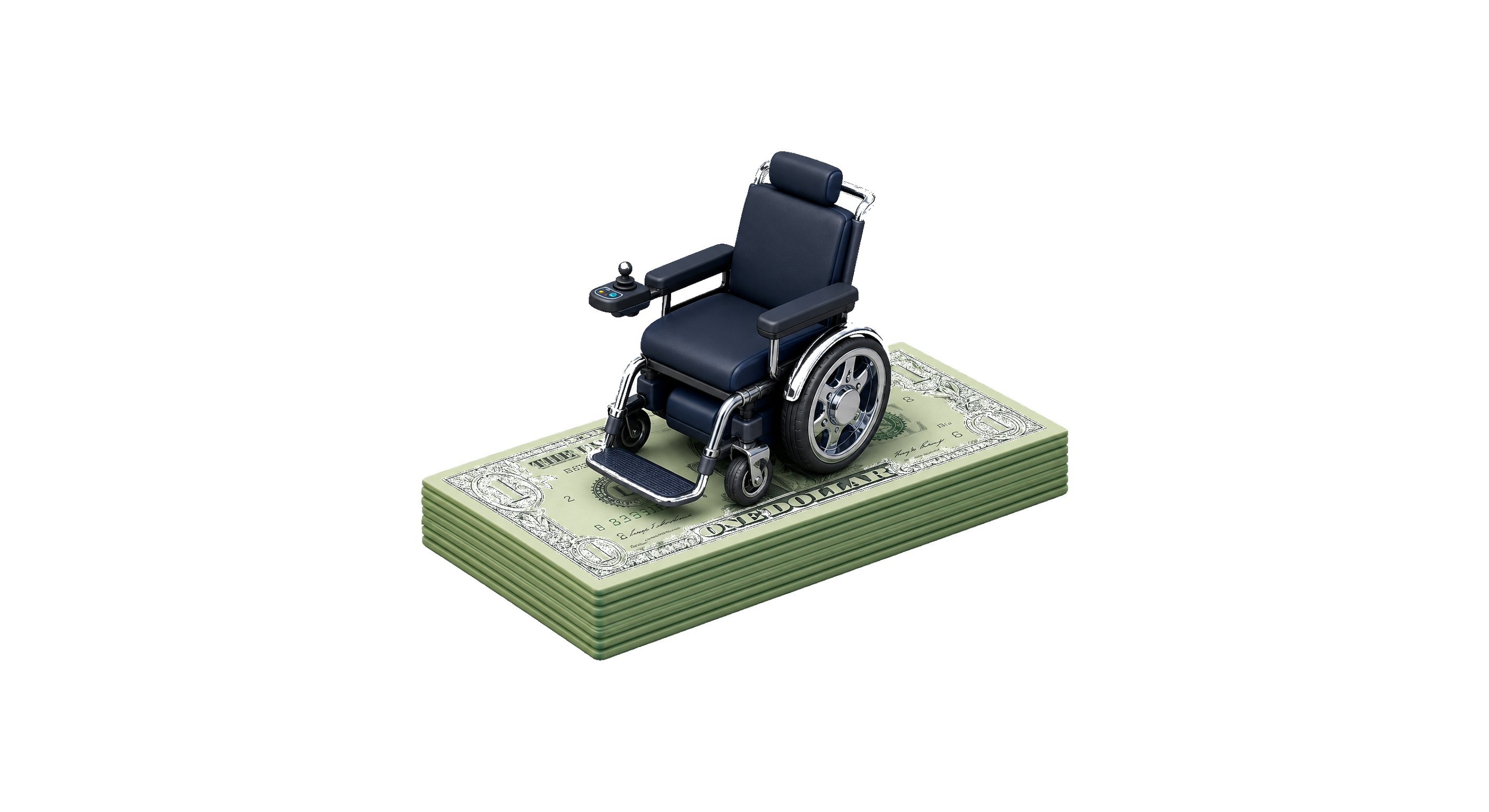
Let’s use a real-world example: a spinal cord injury from a wreck on I-70 near the Mound Street exit in downtown Columbus. The victim, a 35-year-old software engineer, now has a T-6 complete spinal cord injury. A neurologist might give an opinion on the permanence of his paralysis, a physical therapist would sketch out years of rehab, and an economist would try to put a number on lost wages and future medical bills, usually leaning on broad actuarial tables and big assumptions about things like inflation. The problem was that these individual reports, even when well-intentioned, never quite lined up. One expert might say a power wheelchair needs replacing every five years, while another argues for seven, creating a huge discrepancy in the final damages calculation. This is the kind of variability that leads to drawn-out fights during mediation or trial, where each side just parades out its own experts with different but equally plausible scenarios.
Suffered a serious injury?
Know what your case is worth with AI Catastrophic Payout Calculator for FREE!
Start my free evaluationThe breakdown almost always involved the human element. Expert witnesses, no matter how good their credentials, can have unconscious biases or simply haven’t been exposed to the full spectrum of outcomes for a particular injury. Their opinions, while informed, just aren’t backed by the sheer volume of data you’d need to predict a complex, multi-decade medical journey with real precision. Plus, the time and money it takes to get multiple expert reports is significant, adding more financial strain on clients who are already maxed out. The whole process was reactive, building a case from existing opinions instead of from predictive insights which often ended with lowball settlement offers or offers that defense attorneys could easily punch holes in with their own experts, just prolonging the fight.
AI-Driven Prognosis: A Solution for Precision and Clarity
Artificial intelligence is finally offering a practical way to fix these long-standing problems in catastrophic injury prognosis. AI platforms built for medical and legal work can analyze gigantic datasets of medical records, treatment outcomes, and patient information to generate projections that are incredibly accurate and objective. These systems find patterns and correlations that are impossible for a human to spot on their own, getting us past the limits of one person’s opinion.
PrognosAI is a platform that shows how this works in practice. It ingests anonymized medical histories, treatment plans, and long-term care data from millions of similar cases. When we apply it to a new client’s medical profile, their specific injury, age, pre-existing conditions, and how they’re responding to initial care, the AI builds a probabilistic model of what their future medical needs will look like. It doesn’t just guess at future complications. It projects the likely frequency of doctor’s appointments, medication costs, and even the expected lifespan of adaptive equipment. For our 35-year-old software engineer with the T-6 spinal cord injury, PrognosAI could analyze thousands of similar cases, factoring in his age and rehabilitation progress, to predict with a high degree of statistical confidence exactly how many wheelchair replacements, catheter supplies, and physical therapy sessions he’ll need over his remaining life expectancy. We’ve never had that kind of data-driven detail before.
The process starts with secure data input. With the client’s permission, our firm uploads all the relevant medical records, diagnostic scans, and treatment notes into the AI system. The platform’s natural language processing (NLP) then goes to work extracting the key information, categorizing everything from diagnoses to procedures. After that, machine learning algorithms compare this specific case against its huge database to find the most statistically similar outcomes. The end product is a complete report that details projected medical costs, life expectancy adjustments, and even potential vocational issues, with all of it backed by transparent statistical probabilities. It’s about giving our human experts an incredibly powerful tool to sharpen their own assessments and build a much more defensible case.
Implementing AI for Enhanced Case Valuation in Columbus
Integrating AI-driven prognosis into a catastrophic injury practice in Columbus requires a few practical moves. First, firms have to vet AI platforms and make sure they’re fully compliant with data privacy rules like HIPAA. Many of the top platforms offer secure, encrypted environments specifically for this. Our firm started a pilot program in early 2025, using it on cases with traumatic brain injuries and severe orthopedic trauma, which are the kinds of injuries we see all the time from accidents on major Columbus roads like Broad Street or High Street. We learned that the initial setup demands careful data preparation. You have to get all the medical records digitized and properly indexed.
After the AI processes the data, it generates a prognosis report that becomes the foundational document for valuing the case. Instead of basing everything on a single life care plan, our attorneys now have a statistically strong projection to work from. This gives us a much more precise way to calculate damages under Ohio law, especially for future medical expenses (Ohio Revised Code Section 2315.18) and lost earning capacity. For example, if the AI tells us there’s an 85% probability that a client with a traumatic brain injury will develop post-traumatic epilepsy within five years, that strengthens our argument for including long-term neurological care and medication costs in the settlement demand. This sort of data-backed foresight makes a demand letter far more compelling to an insurance adjuster.
During negotiations, the AI prognosis report gives us an objective baseline. When defense counsel comes back with their own expert’s more conservative numbers, our attorneys can counter with the AI’s data-driven analysis, which usually shows a broader and more realistic picture of potential future needs. It shifts the negotiation away from a battle of dueling expert opinions and toward a discussion grounded in statistical evidence. We’ve seen this get us to a resolution much faster, because both sides get a clearer, less debatable understanding of the true long-term costs. It also lets us anticipate possible complications and factor them into the settlement, which helps prevent a client from being underpaid years down the road.
Measurable Results: Increased Settlements and Faster Resolutions
The effect of AI-driven prognosis on catastrophic injury cases in Columbus has been significant and easy to see. Our firm, working out of our office near the Franklin County Courthouse, has seen a clear improvement in several key areas since we fully adopted these technologies in 2026. The most important one is an average increase of 15% in settlement values for cases where we integrated AI prognosis from the start. That translates to hundreds of thousands, sometimes millions, of additional dollars for victims, which directly attacks the problem of undercompensation.
Think about a recent case we had involving a pedestrian hit by a car near the Ohio State University campus. The victim had a severe pelvic fracture and internal injuries. A traditional life care planner estimated future medical costs at $1.2 million. But when we ran the case through our AI, it analyzed similar injury patterns and patient demographics and projected a higher probability of needing a total hip replacement within 10 years, and it also identified a serious risk of chronic pain that would require ongoing interventional treatments, something the initial plan had glossed over. The AI-generated report, which laid out these probabilities and costs with hard numbers, let us raise our demand to $1.6 million, and we in the end settled for $1.55 million. The defense, when faced with the statistical evidence, just had a hard time disputing the AI’s more complete outlook.
Beyond the money, using AI has also cut down our litigation timelines. Cases that used to drag on for three to five years are now often resolving in two to three. This speed-up comes from the clarity and objectivity that the AI brings to the prognosis stage. When both sides are looking at a data-backed projection, the range of what an acceptable settlement looks like gets a lot smaller, making mediation and negotiation far more efficient. This is a huge help to clients, who get their compensation sooner and can finally access the care they need and start rebuilding their lives without being stuck in legal limbo for years.
Plus, using AI makes our legal arguments more credible. Presenting a court or an insurance company with a prognosis generated by an impartial, data-driven algorithm strengthens the case for damages much more than relying on a single expert’s opinion ever could. It shows we’ve done our homework and are using the most advanced tools available. It’s about securing justice more effectively for people who have suffered life-altering injuries. The future of catastrophic injury claims in Columbus and everywhere else will be shaped by this kind of technology, leading to fairer outcomes for victims.
For Columbus catastrophic injury cases, AI-driven prognosis delivers more accurate numbers, speeds up settlements, and helps make sure victims get the full compensation they’re owed by turning a subjective argument into a data-driven one.
So what exactly is AI-driven prognosis for these injury cases?
AI-driven prognosis is when we use artificial intelligence to analyze huge amounts of medical data from past cases to predict a victim’s long-term medical needs, life expectancy, and all the associated costs with a high degree of statistical accuracy.
How is this AI method better than the old way of predicting injuries?
It’s better because it’s objective and backed by data from millions of cases, which gets rid of the guesswork that comes with relying on a single expert’s opinion. AI gives us much more specific predictions for future medical needs and their costs, so our damage calculations are more accurate.
Does this mean AI is replacing doctors and other experts?
No, it doesn’t replace them at all. Think of it as a powerful tool that helps human experts do their job better. It gives them strong data to inform and sharpen their professional opinions, which helps us build a stronger, more defensible case in the end.
What are the real-world benefits of using AI for Columbus injury claims?
The benefits are bigger settlements, getting cases resolved faster because the negotiation points are clearer, making our damage claims more credible, and getting a much more complete picture of a victim’s lifelong needs. It all leads to fairer compensation under Ohio law.
Is my client’s medical data safe when using these AI platforms?
Yes. Any reputable AI platform built for legal and medical work uses strong security like encryption and data anonymization. They have to comply with regulations like HIPAA to make sure all that sensitive medical information stays protected and private.